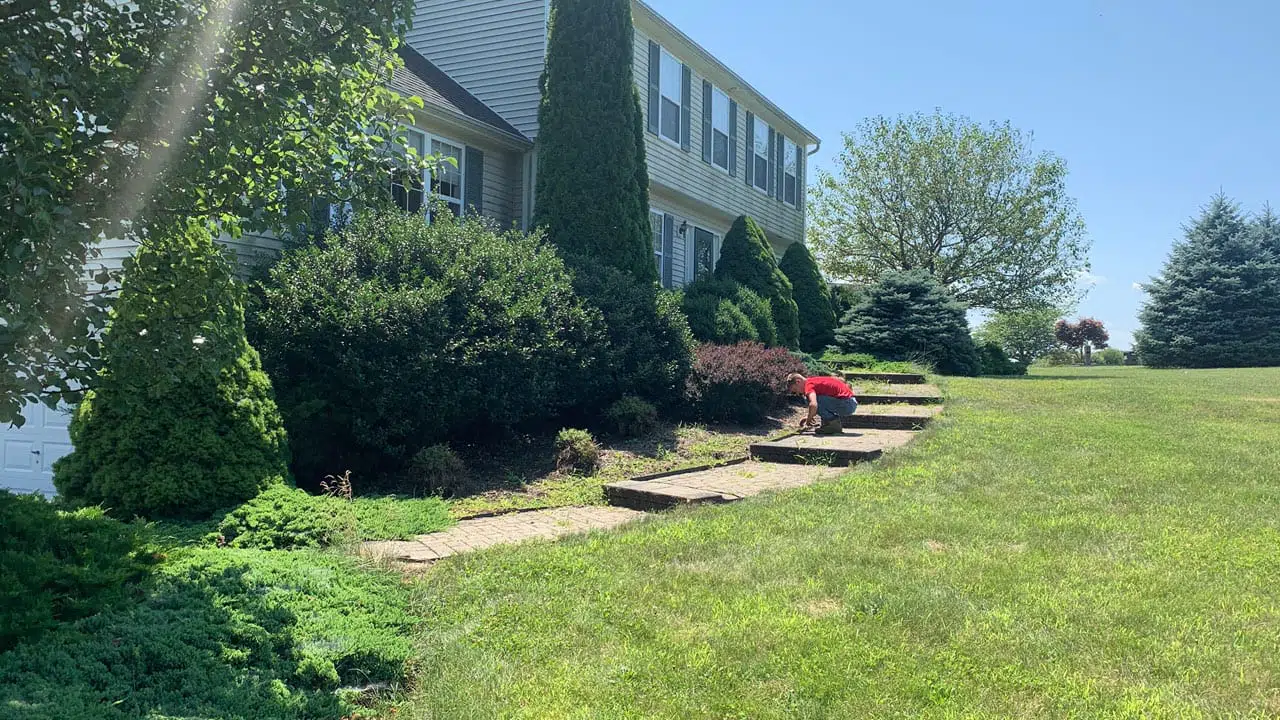
Summer’s been rough on your lawn. Between the heat, foot traffic, and dry spells, what started as green grass in May now looks patchy and thin. If you’re frustrated with bare spots and weeds taking over, you’re not alone. But late summer is actually the perfect time to turn things around.
Most people think they have to wait until next spring to fix their lawn. That’s not true. You can start now and have a thick, green lawn by fall.
Why Late Summer Is the Best Time to Aerate and Overseed Lawn
The timing isn’t coincidental. Late summer through early September creates nearly perfect conditions for professional lawn care in Connecticut. As temperatures begin their gradual descent from summer highs, soil conditions become ideal for new grass seed germination while still maintaining enough warmth for rapid root development.
During summer months, your soil becomes compacted from foot traffic, lawn equipment, and the natural settling that occurs during dry spells. This compaction prevents water, nutrients, and oxygen from reaching grass roots effectively. Meanwhile, existing grass struggles with heat stress, drought conditions, and increased usage from backyard barbecues and family activities.
Key advantages of late summer timing include:
- Soil temperatures remain warm (ideal for seed germination)
- Cooler air temperatures reduce stress on new seedlings
- Increased rainfall typically begins in September
- Weeds become less aggressive as temperatures drop
- New grass has 6 to 8 weeks to establish before winter dormancy
Identifying Signs Your Lawn Needs Professional Attention
Walk across your yard and pay attention to these telltale indicators that professional aeration and overseeding services could dramatically improve your lawn’s health:
Soil Compaction Symptoms
- Water pools on the surface instead of soaking in
- Grass feels spongy or bouncy underfoot
- Difficulty inserting a screwdriver more than 2 inches into soil
- Thatch layer (dead grass between soil and green grass) exceeds ½ inch
Grass Quality Issues
- Thin or bare patches where grass has died out
- Brown spots that don’t recover with watering
- Weeds thriving while grass struggles in the same areas
- Overall lawn appears lackluster despite regular watering and feeding
The reality is that most Connecticut lawns experience some degree of compaction annually, especially in high traffic areas like pathways to outdoor entertaining spaces, children’s play areas, and routes to driveways.

Why Late Summer Works So Well for Your Lawn
Think of late summer as your lawn’s natural reset button. Here’s why this timing is perfect:
- Grass varieties love cooler weather: Fescue, rye, and bluegrass (the types that grow best in Connecticut) actually prefer fall temperatures for their strongest growth
- Your lawn is ready: While it might look tired now, it’s actually getting ready for its favorite growing season
- You work with nature: Aeration creates small openings in your soil, giving new grass seed the perfect place to settle and grow
- Soil conditions are ideal: The ground is still warm from summer, which helps seeds sprout quickly, usually within a week or two
Should You DIY or Hire Professionals?
You can rent equipment and tackle this yourself, but there are some real advantages to professional service. Professional aerators do a more thorough job, and experienced crews know exactly which grass types work best in different areas of your yard. They can also spot problem areas you might miss and make sure the new seed actually makes good contact with the soil.
Your Lawn’s Amazing Transformation Timeline
The beauty of properly timed aeration and overseeding lies in the relatively quick visual improvements you’ll notice:
- Week 1 to 2: New seed begins germinating, appearing as tiny green shoots
- Week 3 to 4: Young grass starts filling in thin areas, lawn looks noticeably greener
- Week 6 to 8: New growth thickens considerably, bare spots disappear
- Fall/Winter: Established grass develops strong root systems
- Following Spring: Your lawn emerges from winter significantly thicker and healthier
This timeline assumes proper watering, which typically becomes easier as September brings increased rainfall and cooler temperatures that reduce evaporation rates.
Maximizing Your Investment and Supporting New Growth
Once aeration and overseeding are complete, your role becomes supporting the new grass through its critical establishment period:
- Watering: Light, frequent watering keeps soil surface moist without creating soggy conditions
- Traffic: Minimize foot traffic on newly seeded areas for 3 to 4 weeks
- Mowing: Wait until new grass reaches 3+ inches before first mowing, then maintain at recommended heights
- Patience: Resist urge to fertilize immediately since new seed contains starter nutrients
The key is consistency rather than intensity. New grass seedlings need steady moisture and protection during their vulnerable early weeks.
Avoiding Common Late Summer Mistakes
Even with perfect timing, certain missteps can undermine your lawn renovation efforts:
- Overwatering: Soggy soil prevents oxygen from reaching roots and can cause seed rot
- Wrong seed type: Sun/shade requirements must match your yard’s specific conditions
- Skipping soil testing: pH imbalances can prevent even the best seed from thriving
- Inadequate soil preparation: Simply throwing seed on compacted ground wastes time and money
Professional services eliminate much of this guesswork through proper soil analysis, equipment calibration, and experience with local growing conditions.

Why Timing Matters More Than You Think
Late summer is the sweet spot for aeration and overseeding, but it’s also when everyone else figures this out too. Smart homeowners book their services early to avoid the rush and guarantee they get work done during this perfect window.
Here’s a bonus: when you aerate and overseed this fall, next year becomes so much easier. Thick, healthy grass fights off weeds naturally, needs less water, and bounces back faster from kids playing or summer parties. This is especially important when planning for next year’s spring lawn care routine.
What Local Professionals Know About Your Area
Connecticut’s weather pattern works perfectly for grass renovation. We go from hot, humid summers straight into cool, crisp falls, which is exactly what new grass loves.
Local lawn care experts understand the unique challenges in our area. Some neighborhoods around Danbury have heavy clay soil, while areas in Bridgewater and Newtown have different soil types altogether. Professional crews also know how things like hills, big trees, or nearby ponds affect which grass varieties work best in different parts of your yard. This expertise becomes even more valuable when considering comprehensive landscape planning for your property.
The experienced team at Brothers Outdoor Services has been working with these local conditions for over 25 years, understanding exactly how Connecticut’s climate affects lawn care timing and techniques.
The Value of Professional Aeration and Overseeding
Quality aeration and overseeding represents an investment in your property’s long-term value and your family’s enjoyment of outdoor spaces. A thick, healthy lawn provides the foundation for everything from children’s play areas to elegant outdoor entertaining spaces.
The cost of professional service typically pays for itself through reduced need for expensive lawn repairs, decreased watering requirements, and the satisfaction of maintaining attractive curb appeal year-round. Many homeowners find that a properly maintained lawn also complements other seasonal landscape maintenance practices throughout the year.
Ready to give your lawn a fresh start? Brothers Outdoor Services has helped Brookfield, Newtown, Danbury, and surrounding area homeowners achieve beautiful lawns. Call 475-777-3293 to schedule your aeration and overseeding service before the optimal window closes.
Frequently Asked Questions
When is the best time to aerate and overseed my lawn in Connecticut?
Late summer through early September is ideal for Connecticut lawns. Soil is still warm for seed germination while cooler air reduces stress on new seedlings. This timing gives new grass 6-8 weeks to establish before winter dormancy.
How long does it take to see results after aeration and overseeding?
You’ll see new grass sprouting within 1-2 weeks. By weeks 3-4, thin areas start filling in noticeably. Full transformation with thick, established grass typically occurs by weeks 6-8 with proper watering and care.
Should I hire professionals or DIY aeration and overseeding?
While DIY equipment is available, professional services use more effective aerators that remove larger soil cores. Professionals also select appropriate seed varieties for your specific conditions and ensure proper seed-to-soil contact for better germination rates.
What are signs my lawn needs aeration and overseeding?
Look for water pooling on the surface, spongy grass underfoot, difficulty inserting tools into soil, thin or bare patches, brown spots that don’t recover with watering, and weeds thriving where grass struggles.
How do I care for my lawn after aeration and overseeding?
Water lightly and frequently to keep soil surface moist, avoid foot traffic for 3-4 weeks, wait until new grass reaches 3+ inches before first mowing, and resist fertilizing immediately since new seed contains starter nutrients.