A healthy yard in June starts with the proper weed control and mulching schedule. These two services help protect your lawn and landscape from unwanted growth and summer heat.
If you plan ahead, you can avoid delays or damage to your yard. Homeowners in Brookfield, Bridgewater, and Newtown, CT, should use this time to prepare their properties for the season.
Why Timing Matters for Weed Control and Mulching
Following a proper weed control and mulching schedule in June helps keep your yard healthy and stress-free. Weeds grow fast in early summer. If not managed, they can quickly spread and take over your lawn.
Mulch adds protection. It locks in moisture and blocks weed growth by covering bare soil.
Why you shouldn’t wait:
- Weeds grow stronger: Weeds grow stronger in warm, damp weather.
- Apply mulch early: Mulch works best when applied before the heat dries out the soil.
- Crews book up fast in CT: Landscaping crews book up, especially in Brookfield, Bridgewater, and Newtown, CT.

How Connecticut’s Climate Impacts Your Weed Control and Mulching Schedule
Connecticut’s climate brings challenges that affect how and when you manage your yard. Your weed control and mulching schedule should match local weather and soil conditions. This is especially important if you live in Brookfield, CT, and nearby areas.
Warm Days, Cool Nights
- Weed growth increases in June: June often brings sunny days and cooler nights, encouraging weed growth.
- Mulch stabilizes soil temperature: Mulch helps keep soil temperatures stable, which is key for root health.
- Moisture loss in unshaded areas: Moisture loss can sneak up quickly, especially in open areas without shade.
Rainfall and Drainage Matter
- Early summer rains: It can feed weeds just as much as they feed your plants.
- Water runs off too fast: It happens without mulch or water evaporates before it sinks in.
- Mulch helps reduce erosion: Mulch does this and improves water retention in sloped yards.
Connecticut Soil Conditions
- Sandy or rocky: This is the soil condition in Fairfield County especially in places that dry out fast.
- Mulch adds a layer of protection: In the region’s soil condition, organic matter improves long-term health.
- Keeping weeds in check: This is especially important in nutrient-light soils.
The Best Weed Control and Mulching Schedule for June
A solid weed control and mulching schedule in June helps protect your lawn during the hottest part of the year. Here’s a simple guide for homeowners in Brookfield, CT, and nearby towns.
Week 1–2: Focus on Weed Prevention
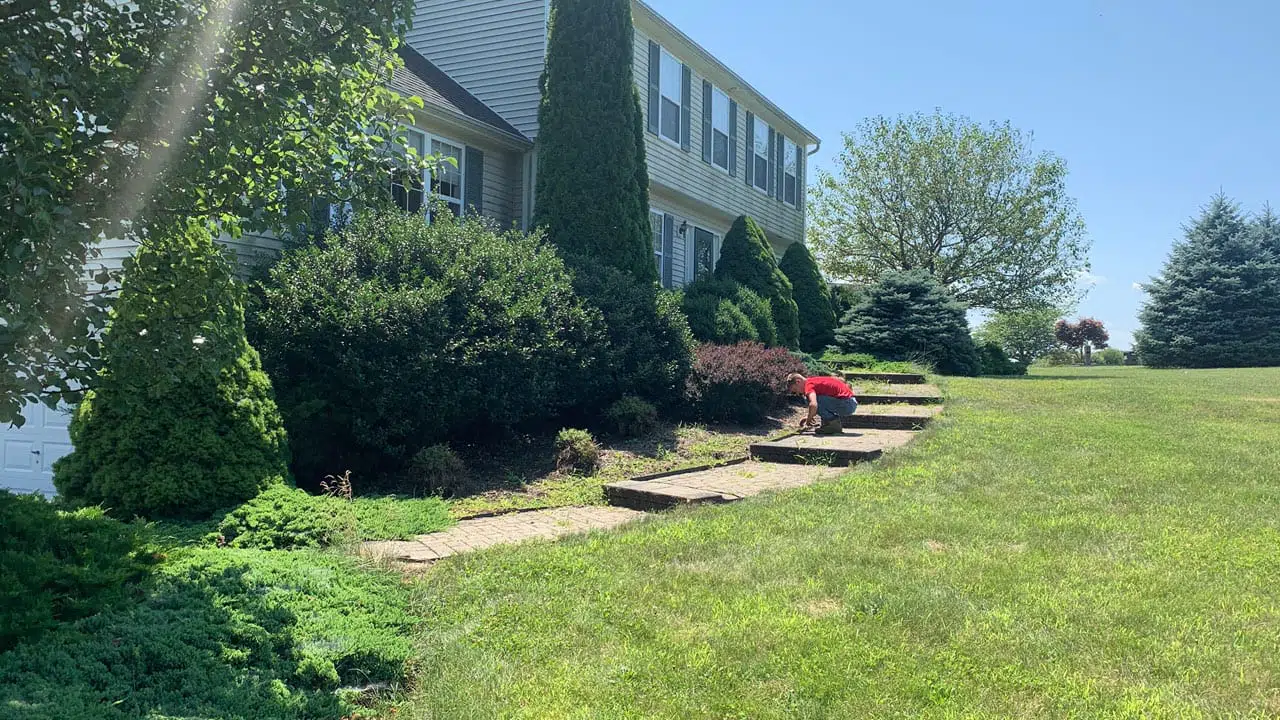
- Inspect garden beds and lawn edges for early weed growth.
- Hand-pull or spot-treat weeds before they spread.
- Apply a pre-emergent herbicide, if needed, to prevent new weeds.
Tip: Early June is the best time to act before weed roots get deep.
Week 2–3: Time to Mulch
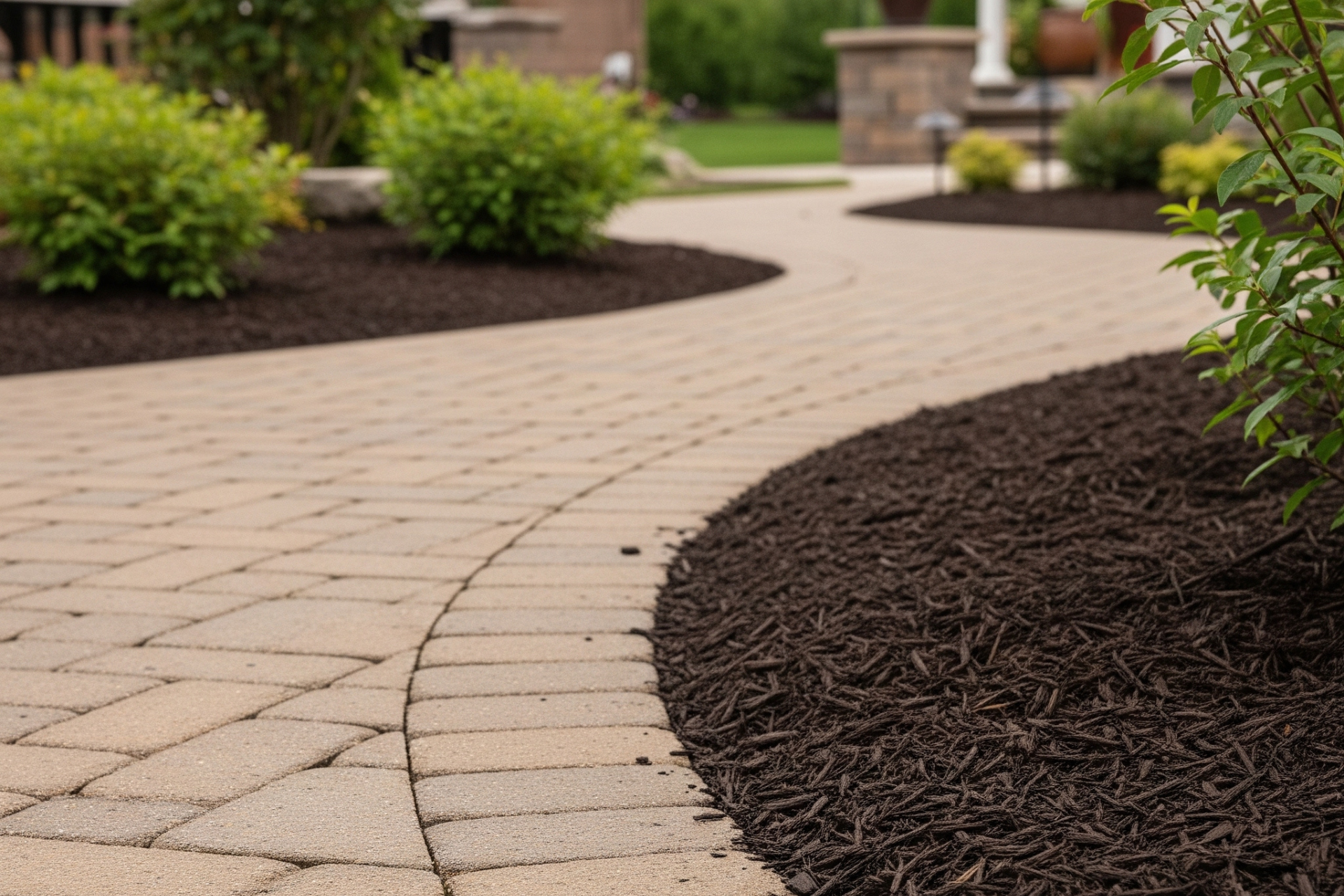
- Lay fresh mulch around trees, shrubs, and garden beds.
- Use 2–3 inches of mulch to block sunlight from weed seeds.
- Keep mulch away from plant stems to prevent rot.
Tip: Shredded bark or natural mulch blends work well in southern Connecticut’s summer heat.
Week 4: Light Maintenance
- Check for weed regrowth after mulching.
- Spot-treat or pull weeds in open areas.
- Rake mulch lightly to keep it looking fresh.

How Weed Control and Mulching Support Lawn Care & Maintenance
A smart weed control and mulching schedule is more than just a seasonal task—it’s the foundation of good lawn care and maintenance. When done right, it makes everything else easier.
Fewer Weeds = Healthier Grass
- Weeds compete with grass for water, nutrients, and space.
- Removing weeds early helps your lawn grow thicker and greener.
- Less competition means fewer brown spots and bare patches.
Mulch Helps More Than Garden Beds
- Mulch around garden edges keeps weeds from creeping into the lawn.
- It also improves soil quality, helping nearby grass and plants stay strong.
- Insects and pests are less likely to take over a well-mulched yard.
Tip: Combining mulching with mowing, aeration, and trimming creates a full-circle approach to yard health.
Mulching Tips for Different Parts of Your Property
Different areas of your yard have different needs. A one-size-fits-all approach to mulching can lead to problems. Tailoring your weed control and mulching schedule to specific parts of your property helps everything thrive.
Around Trees and Shrubs
- Leave a gap around the base of the trunks to avoid rot.
- Use a mulch ring about 2–3 feet wide to suppress weeds and retain water.
- Refresh mulch here every season to improve soil structure.
In Planting Beds
- Apply 2–3 inches of mulch evenly—no mounds or bare spots.
- Choose a mulch that complements your soil type and local climate.
- Pull out weeds by hand before spreading them to stop them from growing under the mulch.
Along Patios and Walkways
- Keep mulch slightly below hard surfaces to prevent runoff.
- Use edging or borders to stop mulch from spilling into walking areas.
- Check often for weed regrowth where mulch meets stone or concrete.
Common Mistakes to Avoid in Your June Mulching and Weed Plan
Even with the best intentions, making simple mistakes can affect your weed control and mulching schedule. Knowing what to avoid can save time, money, and frustration.
Mistake #1: Waiting Too Long
- Delaying weed control lets roots grow deeper and spread faster.
- Waiting until the mulch runs out of stock or professionals are booked can lead to missed opportunities.
Solution: Start early in June, before the heat and growth peak.
Mistake #2: Using Too Much Mulch
- Piling on more than 3 inches can suffocate roots and trap moisture.
- Thick layers can attract pests and cause mold or fungus.
Solution: Stick to 2–3 inches of mulch and spread it evenly.
Mistake #3: Skipping the Weed Removal Step
- Putting mulch over existing weeds doesn’t stop growth—it hides it.
- Some weeds push right through mulch if not pulled or treated first.
Solution: Always weed the area before laying mulch.
Mistake #4: Forgetting Lawn Edges and Borders
- Weeds often sneak in through lawn edges and garden borders.
- These are areas most homeowners overlook.
Solution: Use edging tools and mulch up to but not over these areas.
Plan Ahead and Stay on Track With Your Weed Control and Mulching Schedule
A proper weed control and mulching schedule helps your yard stay clean, healthy, and low-maintenance all summer. When done in June, it blocks weed growth, keeps the soil moist, and supports stronger grass and plants.
Homeowners in Brookfield, Bridgewater, and Newtown can avoid service delays by planning now. Mulching and weed control set the stage for smoother mowing, trimming, and seasonal lawn care.
Need help staying on top of your weed control and mulching schedule? Reach out to Brothers Outdoor Services through our contact form or call (475) 777-3293.
FAQ: Weed Control and Mulching in Connecticut Yards
When should I schedule mulching and weed control in Connecticut?
The best time is early to mid-June. This helps stop weeds before they spread and protects your soil before the summer heat settles in.
How long do weed control and mulching usually take?
Most services can be completed in a single visit. Larger properties or those with heavy weed growth may take more time.
Do local soil or weather conditions affect how mulch is applied?
Yes. In Brookfield, CT, mulch helps keep the soil moist and protected during summer weather changes. Timing the service around rain or watering improves results.