
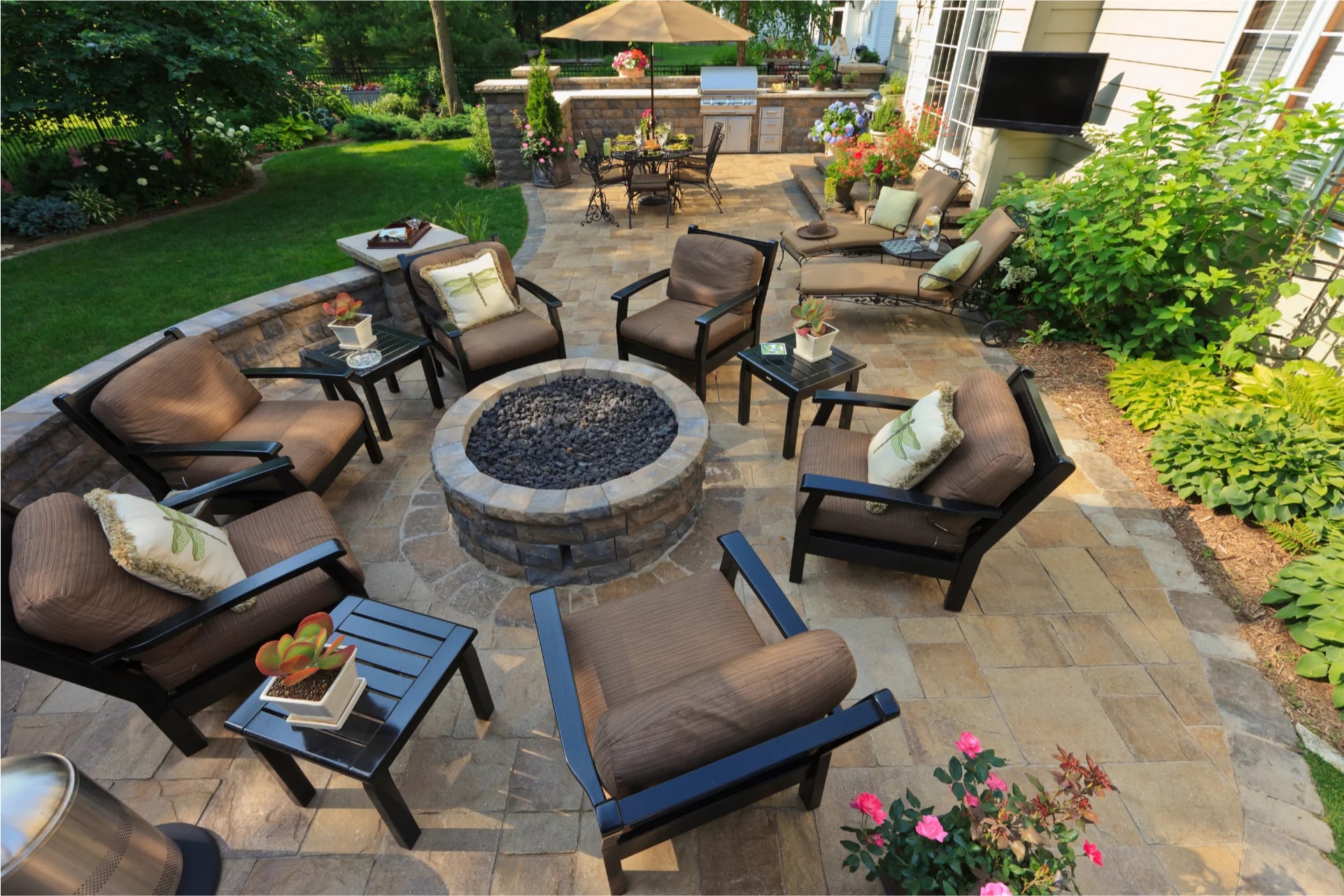
As winter fades and spring begins in Connecticut, homeowners start looking for ways to make the most of their outdoor spaces. A fire pit or outdoor fireplace can be a game-changer, creating a warm, inviting atmosphere perfect for gatherings, relaxation, and extended backyard enjoyment.
With Connecticut’s cool spring and crisp autumn nights, a fire feature allows you to enjoy your outdoor space longer throughout the year. But before installing one, it’s essential to consider styles, materials, safety precautions, and maintenance to ensure you choose the right option for your home.
Fire Pit vs. Outdoor Fireplace: Which One is Right for You?
Before choosing a fire feature, it’s important to understand the key differences between fire pits and outdoor fireplaces. Each option offers unique benefits depending on your space, lifestyle, and design preferences.
Fire Pits: Social and Versatile
Fire pits are an excellent choice if you love gathering with family and friends. They create a 360-degree heat source, allowing multiple people to sit around and enjoy the warmth. Fire pits can be wood-burning, gas-powered, or propane-fueled, offering flexibility based on convenience and ambiance.
- Best for: Casual gatherings, open spaces, and homes with larger yards
- Popular designs: Circular, square, or custom-built into patios
- Pros: Affordable, easy to install, and encourages social interaction
- Cons: More exposed to wind and smoke, requires more clearance space
Outdoor Fireplaces: Elegant and Cozy
If you’re looking for a more private and controlled fire feature, an outdoor fireplace might be the better choice. These structures create a focal point in outdoor living spaces and are often built into patios, seating areas, or outdoor kitchens.
- Best for: Structured outdoor spaces, patios, and homes with limited yard space
- Popular designs: Traditional brick, stone, or stucco with a chimney
- Pros: Provides wind protection, contains smoke, and adds architectural value
- Cons: More expensive, requires professional installation, and produces directional heat
Both options can enhance your Connecticut backyard, but the best choice depends on your entertainment style and available space.

Materials and Design Options for Fire Pits & Outdoor Fireplaces
The materials you choose for your fire pit or outdoor fireplace can greatly impact its durability, aesthetics, and overall feel. Whether you want a rustic, modern, or traditional look, selecting the right materials ensures your fire feature complements your outdoor space.
Popular Materials
- Natural Stone – A top choice for Connecticut homeowners, natural stone blends seamlessly into the landscape while offering durability and a timeless look.
- Brick – Classic and fire-resistant, brick provides a traditional aesthetic and holds up well in New England’s seasonal weather changes.
- Concrete – A modern and highly customizable option, concrete fire features can be shaped, stained, and finished to match any outdoor design.
- Metal (Steel or Cast Iron) – Often used for portable fire pits, metal offers a sleek, contemporary touch but requires maintenance to prevent rust.
Design Considerations
When designing your fire pit or outdoor fireplace, think about:
- Shape & Size – Do you want a large built-in fireplace for a grand statement or a compact fire pit for intimate gatherings?
- Fuel Type – Wood-burning models provide a traditional feel, while gas-powered fire features offer convenience with instant ignition.
- Integration with Other Features – Fire features pair well with seating walls, patios, and outdoor kitchens for a seamless backyard experience.
Choosing the right materials and design ensures that your fire pit or outdoor fireplace enhances both the aesthetic and functionality of your outdoor space.
Fire Pit & Outdoor Fireplace Safety
Adding a fire feature to your backyard is exciting, but safety should always come first. Proper installation and usage help prevent accidents and ensure a stress-free outdoor experience.
Location Matters
Before installation, check local Connecticut fire codes and regulations regarding fire pits and outdoor fireplaces. Some towns may have specific rules about placement, fuel type, or required permits.
A few general guidelines:
- Keep fire pits at least 10-15 feet away from your home, fences, trees, and other flammable structures.
- Outdoor fireplaces should be built on a stable, non-combustible surface like concrete, pavers, or gravel.
- Consider wind direction to minimize smoke blowing toward seating areas.
Safe Operation Tips
- Never leave the fire unattended – Always have a responsible adult nearby.
- Use the right fuel – Dry, seasoned wood burns cleaner than wet or treated wood. If using gas, check for leaks regularly.
- Have an extinguisher ready – A fire extinguisher, hose, or bucket of sand should be easily accessible.
- Be mindful of embers – Use a spark screen for fire pits to contain stray embers, especially in breezy conditions.
With the right precautions, your fire feature can be a safe and enjoyable addition to your backyard.
Keeping Your Fire Pit or Outdoor Fireplace in Top Shape
Regular maintenance is key to keeping your fire pit or outdoor fireplace looking great and functioning safely throughout the seasons. Connecticut’s cold winters and humid summers can take a toll on outdoor features, so staying on top of care will extend their lifespan.
Routine Maintenance Tips
- Clean Out Ash & Debris – For wood-burning fire pits and fireplaces, remove ash buildup after each use to prevent clogging and excessive smoke.
- Check for Cracks & Damage – Freezing temperatures can cause materials like brick and stone to expand and crack. Inspect your fire feature every season.
- Protect with a Cover – Use a weather-resistant cover when not in use to prevent moisture buildup, which can lead to rust or deterioration.
- Gas Fire Features – If you have a gas-powered fire pit or fireplace, regularly inspect burners and connections to ensure safe operation.
Seasonal Care for Connecticut Homes
- Spring & Summer: Give your fire feature a deep clean after winter. Check for winter damage and ensure all parts are in working order.
- Fall: Trim overhanging branches and clear out leaves that could be a fire hazard.
- Winter: If not using your fire feature in winter, shut off gas lines (if applicable) and keep it covered to prevent snow damage.
By following these maintenance steps, you’ll keep your fire feature in great condition for years of cozy gatherings.

Bring Warmth to Your Backyard with Brothers Outdoor Services
A fire pit or outdoor fireplace is more than just a heat source—it’s a gathering place, a design statement, and an investment in your home’s outdoor space. Whether you prefer the social ambiance of a fire pit or the elegant structure of an outdoor fireplace, the right choice can transform your backyard into a cozy retreat for all seasons.
At Brothers Outdoor Services, we specialize in designing and installing custom fire features that complement your landscape and lifestyle. Our team ensures every project meets Connecticut’s safety standards while bringing your vision to life with high-quality materials and craftsmanship.
Ready to enhance your outdoor space? Fill out our contact form or call us at 475-777-3293 to schedule a consultation. Let’s create a backyard you’ll love for years to come!
Frequently Asked Questions
What’s the best location for a fire pit or outdoor fireplace?
The ideal location should be at least 10–15 feet away from your home, trees, fences, and other flammable structures. Consider wind direction, accessibility, and seating arrangements for the best experience.
Are fire pits or outdoor fireplaces allowed in all Connecticut neighborhoods?
Regulations vary by town, and some areas have restrictions on open flames, fuel types, or seasonal burn bans. Always check with your local fire department or municipality before installation.
Which material is best for a long-lasting fire feature?
Natural stone, brick, and concrete are popular choices in Connecticut due to their durability and ability to withstand seasonal weather changes. Metal fire pits are also an option but require more maintenance to prevent rust.
How do I maintain my fire pit or outdoor fireplace?
Regularly remove ash and debris, check for cracks or damage, and use a weather-resistant cover when not in use. Gas fire features should have their burners and connections inspected periodically for safety.