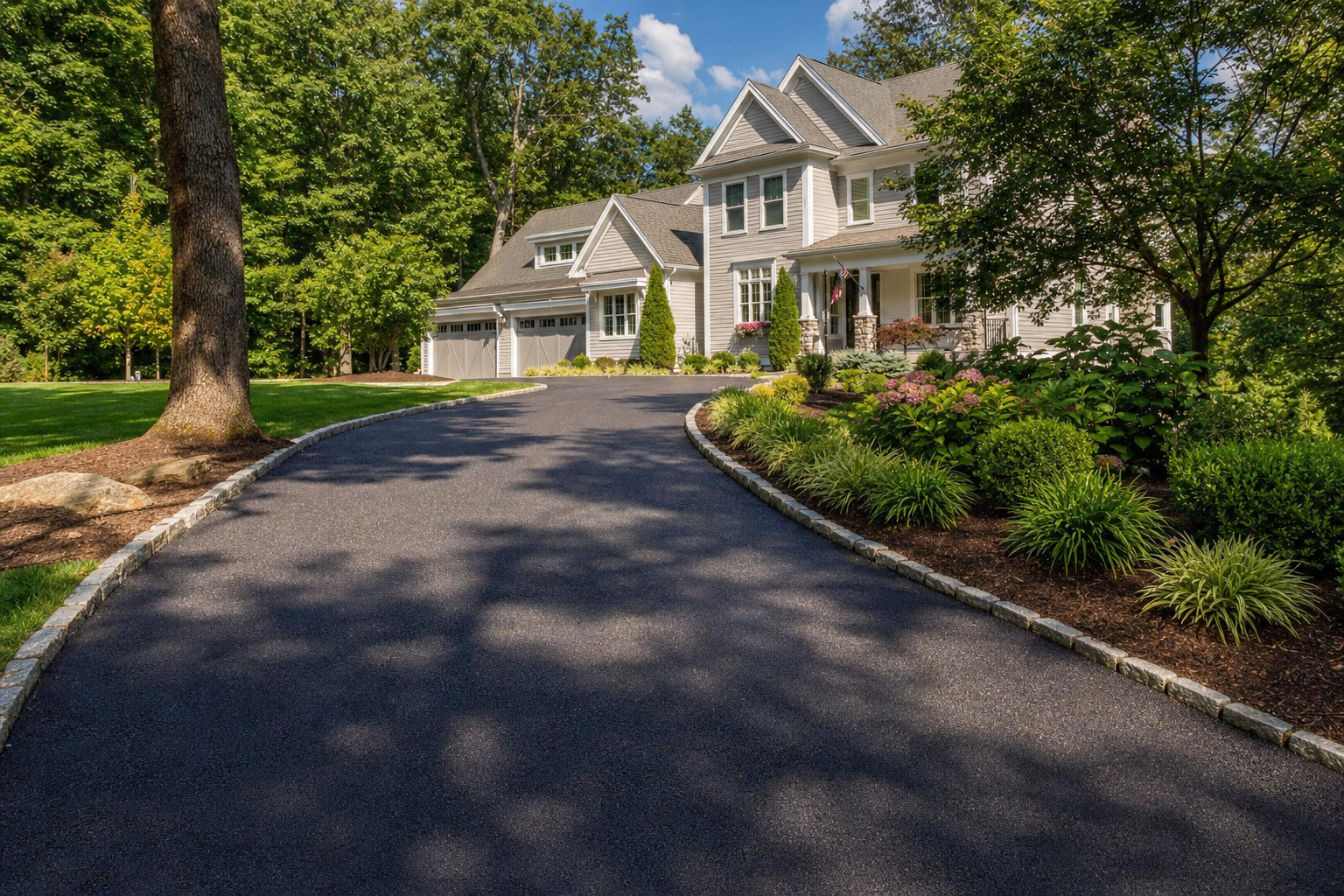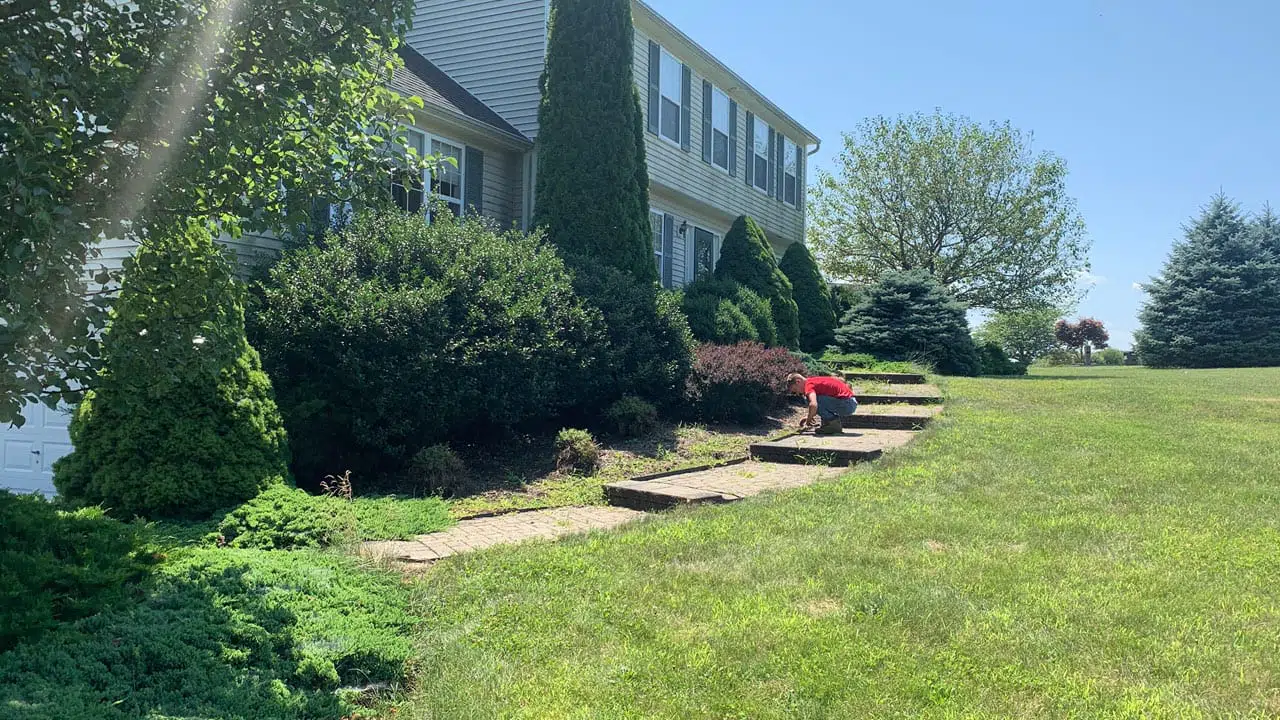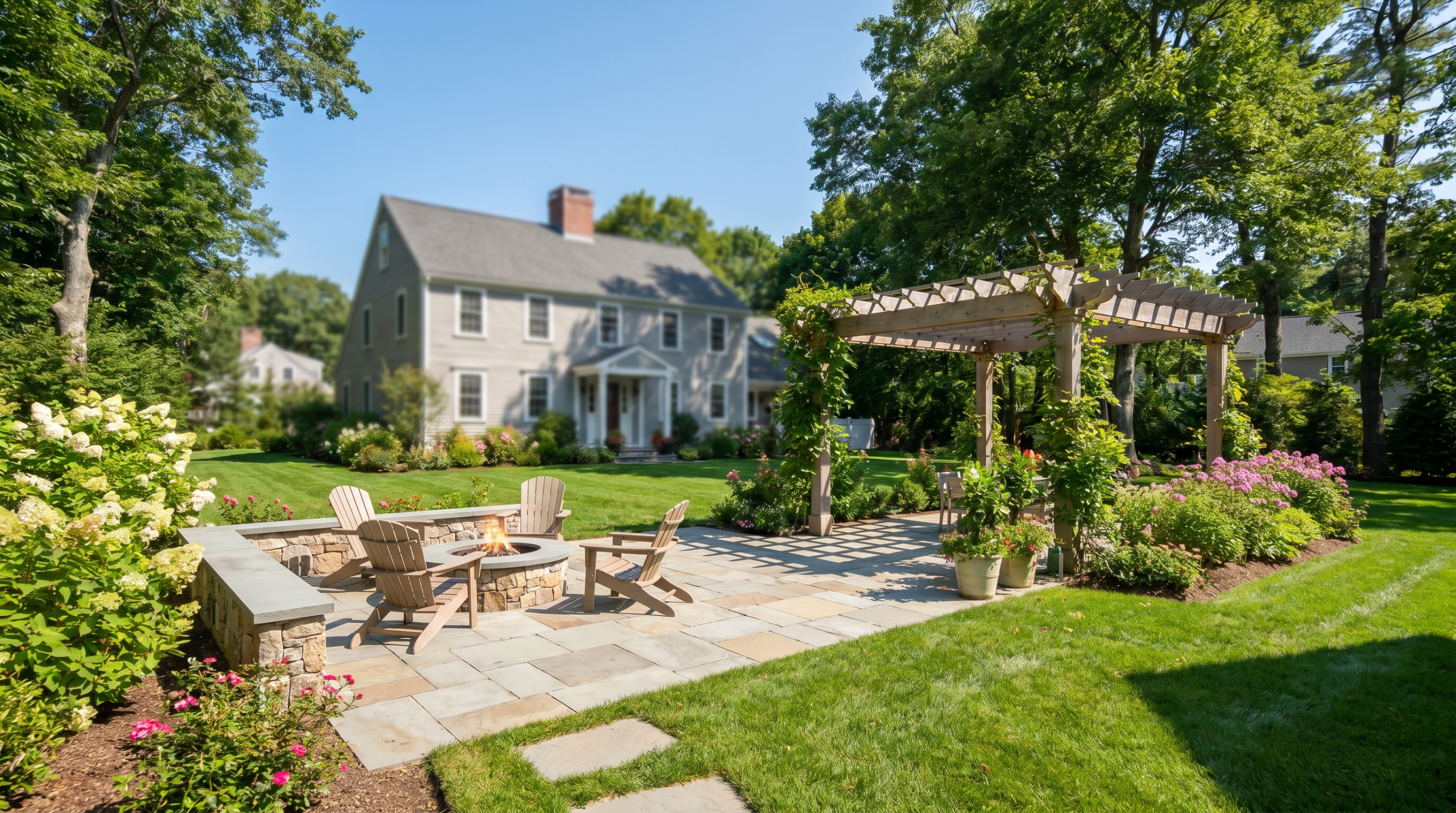
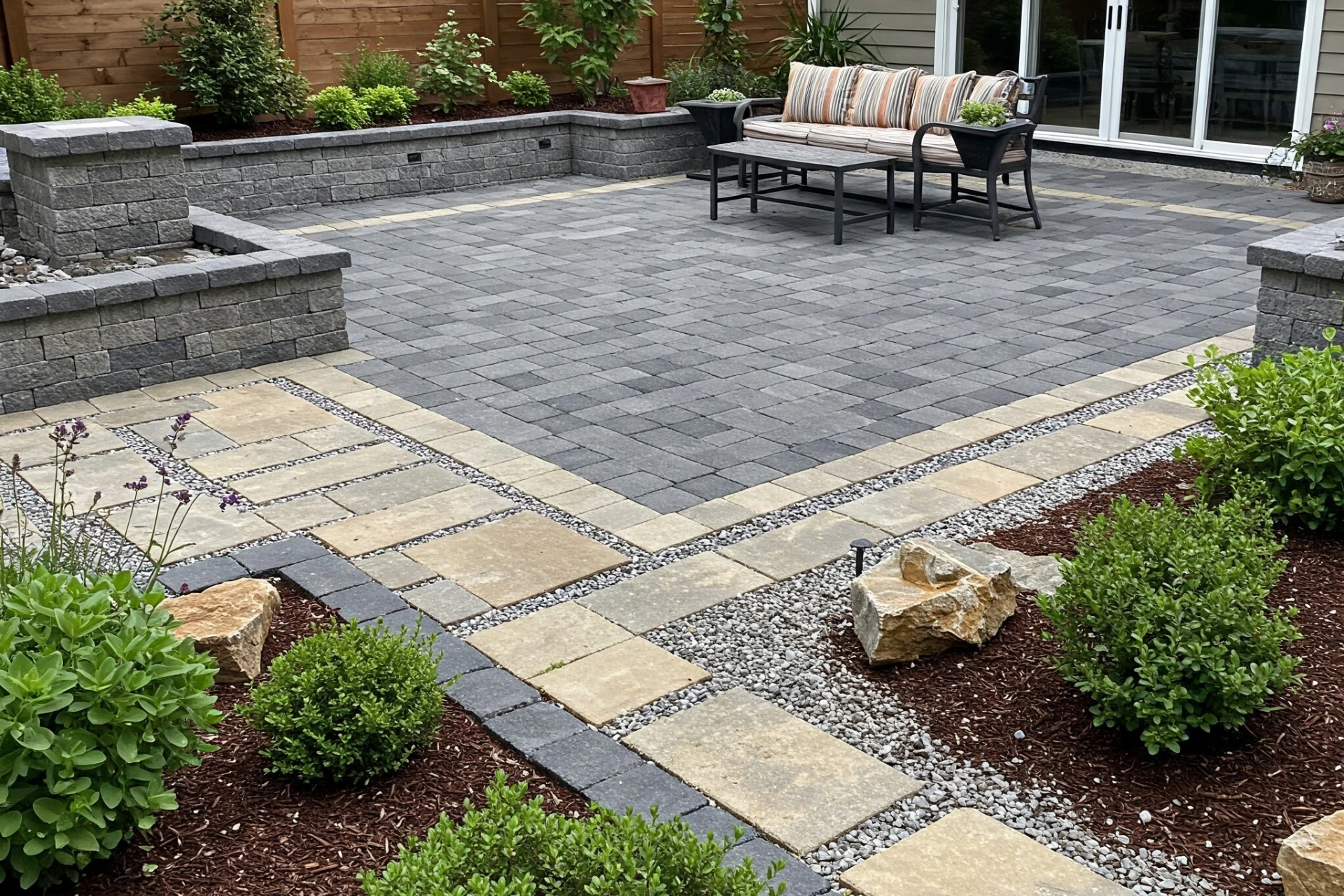
Choosing the right ground cover is essential for a beautiful and functional landscape. Homeowners in Brookfield, CT, often debate between mulch vs. stone when enhancing their outdoor spaces. Both options have unique benefits, but selecting the best material depends on factors like cost and Connecticut’s weather conditions.
In this article, we’ll compare landscaping materials like mulch and decorative stone, breaking down their pros and cons. This guide will help you decide which option suits your yard best.
Pros and Cons of Mulch in Connecticut Landscapes
Mulch is popular for garden beds and softscapes, offering functional and aesthetic benefits. However, like any landscaping material, it comes with its own set of drawbacks. Here’s a breakdown of its pros and cons:
Pros of Mulch
- Enhances Plant Health: Mulch helps keep moisture and soil hydrated. It also reduces the need for frequent watering. Mulch regulates soil temperature, protecting roots from Connecticut’s unpredictable spring weather.
- Suppresses Weeds: A thick layer of mulch blocks sunlight, preventing weeds from taking over flower beds and garden spaces.
- Improves Soil Quality: Organic mulch decomposes over time, adding nutrients to the soil and improving its structure. This is particularly beneficial for flower beds and vegetable gardens.
- Affordable & Easy to Install: Mulch is less expensive than decorative stone. You can also spread it quickly over garden beds without special equipment.
Cons of Mulch
- Needs Regular Replacement: Organic mulch breaks down over time, meaning it must be refreshed annually to maintain its benefits.
- Can Attract Pests: Wood-based mulches may draw insects like termites or carpenter ants if placed too close to a home’s foundation.
- Messy During Storms: Heavy rain or strong winds can wash away mulch, especially in sloped areas. This may require additional maintenance after severe weather.
Mulch is an excellent option for low-maintenance landscaping that supports plant health. But it does require periodic upkeep.

Pros and Cons of Decorative Stone for Landscaping
Decorative stone, also known as rock mulch or gravel, is a durable alternative to traditional mulch. It’s often used in hardscaping in Connecticut for pathways, garden beds, and around patios. While it offers long-term benefits, it may not be the best choice for every landscape.
Pros of Decorative Stone
- Long-Lasting & Low Maintenance: Unlike mulch, decorative stone doesn’t break down over time. Once installed, it can last for years with minimal upkeep.
- Resistant to Weather Conditions: Stone won’t wash away in heavy rain or decompose in humid Connecticut summers. It stays in place, making it ideal for sloped areas.
- Prevents Weed Growth: When paired with a high-quality landscape fabric, stone provides excellent weed control with little need for reapplication.
- Variety of Styles & Colors: Homeowners can choose from a wide range of stones. These include pea gravel, river rock, and crushed granite to match their landscape design.
Cons of Decorative Stone
- Higher Upfront Cost: Stone is more expensive than mulch in terms of materials and installation. However, its longevity may make it more cost-effective in the long run.
- Not Ideal for Plant Growth: Unlike mulch, stone does not add nutrients to the soil. It can also retain heat, which may stress plants during hot summer months.
- Harder to Install & Remove: Installing decorative stone requires more labor. Then, once in place, it’s difficult to remove or replace it compared to mulch.
While decorative stone is a durable and low-maintenance landscaping material, it may not be the best choice for every garden.

Which Is Best for Your Landscape Needs?
Choosing between mulch and decorative stone depends on your specific landscaping goals. Below, we break down which material works best based on different factors.
For Plant Health & Gardens – Mulch Wins
- Organic mulch adds nutrients to the soil as it decomposes, supporting plant growth.
- It retains moisture, keeping plants hydrated during Connecticut’s dry spells.
- Best for flower beds, vegetable gardens, and areas with trees or shrubs.
For Low-Maintenance Landscaping – Stone Wins
- Decorative stone doesn’t need annual replacement like mulch.
- It resists erosion and stays in place even during heavy rain.
- Ideal for pathways, driveways, and rock gardens.
For Cost & Budget – Depends on Your Preference
- Mulch is more affordable upfront but needs to be refreshed yearly.
- Decorative stone costs more initially but lasts much longer, making it a better long-term investment.
For Aesthetic Appeal – Tie (Depends on Style)
- Mulch gives a natural, organic look that blends well with softscapes.
- Stone offers a polished, modern appearance and comes in various colors and textures.
Ultimately, the best ground cover for CT depends on whether you prioritize plant health, long-term savings, or low-maintenance solutions.
Where to Use Mulch vs. Decorative Stone
For homeowners in Brookfield, CT, the choice between mulch and decorative stone depends on the function of each area in the landscape. Here’s how to decide:
Best Places to Use Mulch
- Garden Beds & Flower Beds: Keeps plants healthy by enriching the soil and retaining moisture.
- Tree & Shrub Bases: Protects roots from temperature fluctuations and prevents weeds.
- Vegetable Gardens: Organic mulch improves soil fertility, benefiting edible plants.
Best Places to Use Decorative Stone
- Walkways & Pathways: Provides a stable, durable surface that won’t wash away.
- Driveways & Around Patios: Adds a sleek, modern look while preventing erosion.
- Rock Gardens & Dry Areas: Works well in spots where plants struggle to grow.
Choosing the Best Landscaping Material for Your Yard
Both mulch and decorative stone have their advantages. Still, the best choice depends on your landscaping goals.
If you want to improve plant health and create a vibrant garden, mulch is the better option. For a low-maintenance landscaping solution that lasts for years, decorative stone is the way to go. Many homeowners in Brookfield, CT, combine both to achieve a balanced and visually appealing outdoor space.
If you’re unsure which material is best for your landscape, Brothers Outdoor Services can help! Our team specializes in hardscaping in Brookfield, CT, and nearby areas, including mulch installation. Contact us today by filling out our contact form or calling (475) 777-3293 to schedule a consultation.
Frequently Asked Questions
Which is more affordable, mulch or decorative stone?
Mulch has a lower upfront cost but needs to be replaced annually, increasing long-term expenses. Decorative stone costs more initially but lasts for years with minimal maintenance.
How does Connecticut’s weather affect mulch and stone?
Mulch helps insulate plant roots during cold winters and retains moisture in hot summers but can wash away in heavy rain. Stone is durable in all weather in Brookfield, CT, but may retain heat in the summer, which can stress plants.
Can I use both mulch and decorative stone in my landscape?
Yes! Many homeowners in Brookfield, CT, use mulch for garden beds and plant health. At the same time, they place decorative stones in pathways, around patios, or in areas needing erosion control.
When is the best time to install mulch or decorative stone?
Spring and fall are ideal for mulch to protect plants from temperature changes. Stone can be installed anytime but is best done in dry conditions to ensure proper placement.